

Large ceiling fans can make Australian outdoor living areas more comfortable, especially covered patios, alfresco spaces, and verandahs. They help circulate air across larger spaces without taking up valuable floor space.
However, not every large ceiling fan is suitable for outdoor use. Moisture, coastal salt, direct rain, and temperature changes can affect its performance and lifespan.
Here is what to consider before choosing a large outdoor ceiling fan.
Why Large Ceiling Fans Are Useful Outdoors
Outdoor entertaining is popular in Australia, particularly during warmer months. A suitable large ceiling fan can improve airflow and make these spaces more comfortable.
Improve Air Circulation in Alfresco Areas
Large alfresco areas can feel stuffy when warm air becomes stagnant. A large ceiling fan helps move air across the space, creating a cooling sensation.
It works particularly well in:
-
Covered patios and verandahs.
-
Outdoor dining and entertaining areas.
-
Large covered decks and outdoor kitchens.
For wide spaces, one large fan or multiple smaller fans may be suitable depending on the layout and required airflow.

Make Outdoor Entertaining More Comfortable
A ceiling fan creates a cooling breeze without occupying floor space. This is useful when outdoor furniture, dining tables, and barbecue equipment already take up much of the available area.
Unlike air conditioning, a ceiling fan does not lower the actual air temperature. It makes people feel cooler by increasing air movement around the body.
Support Year-Round Air Circulation
Some large ceiling fans feature reversible airflow.
During summer, downward airflow creates a cooling breeze. In cooler months, reverse mode can help circulate warm air in partially enclosed spaces.
However, this benefit is more limited in completely open outdoor areas.
Understand Outdoor and Weather-Resistance Ratings
Before buying a large ceiling fan, check whether it is approved for the intended installation location.
A fan designed for an indoor living room should not automatically be installed in an outdoor area.
Dry, Damp, and Wet Location Ratings
|
Rating |
Suitable Location |
|---|---|
|
Dry Rated |
Indoor rooms |
|
Damp Rated |
Protected patios and verandahs |
|
Wet Rated |
Exposed outdoor areas with direct water exposure |
These ratings are not interchangeable.
A damp-rated fan may work well under a covered alfresco roof, but it should remain protected from direct rain and prolonged moisture.
A wet-rated model is designed for greater water exposure, but installation requirements still need to be followed.
What About IP Ratings?
IP stands for Ingress Protection. It indicates how well electrical equipment is protected against dust and water entering its enclosure.
The first number relates to solid particles, while the second relates to water protection.
However, an IP rating alone does not guarantee that a ceiling fan is suitable for outdoor installation. Always check the manufacturer's location rating and installation instructions.
Extra Protection for Coastal Homes
Australian coastal homes face additional challenges because salt particles can settle on metal surfaces.
Over time, salt and moisture can affect motor housings, brackets, fasteners, and electrical components.
316 stainless steel generally provides better resistance to chloride exposure than 304 stainless steel.
For coastal properties, look for corrosion-resistant materials and finishes. Regular cleaning is also important.
Choose Materials That Handle Outdoor Conditions
The materials used in the blades, motor housing, and mounting hardware can influence the fan's durability.
ABS and Aluminium Blades
ABS blades are commonly used in outdoor-rated fans because they do not absorb moisture like untreated timber.
Aluminium is another practical option. It is lightweight and naturally forms a protective oxide layer.
Both materials can work well when the complete fan is designed for the intended outdoor environment.
Natural Timber Blades
Timber ceiling fans offer a warm appearance that complements Australian outdoor entertaining areas.
However, natural wood can absorb moisture and respond to changes in humidity. A protective finish does not automatically make an indoor timber fan suitable for outdoor use.
Always check the manufacturer's installation rating before choosing timber blades for an alfresco area.
Compare Common Materials
|
Material |
Main Advantage |
Consideration |
|---|---|---|
|
ABS |
Moisture resistant |
Check UV suitability |
|
Aluminium |
Lightweight |
Finish quality matters |
|
Natural Timber |
Warm appearance |
Requires suitable protection |
|
Stainless Steel |
Corrosion resistance |
Grade affects performance |
|
Powder-Coated Metal |
Multiple finishes |
Damaged coatings need attention |

How to Choose the Right Large Outdoor Ceiling Fan
Once you have confirmed the weather rating, consider fan size, airflow, and installation height.
Match Fan Size to Your Outdoor Area
The correct fan diameter depends on the dimensions and layout of your alfresco space.
|
Outdoor Area |
Suggested Fan Size |
|---|---|
|
Small Covered Patio |
48-52 inches |
|
Medium Alfresco Area |
52-60 inches |
|
Large Entertaining Area |
60-72 inches |
|
Very Large Covered Space |
84 inches or larger |
These are general starting points. Ceiling height, furniture placement, and airflow performance also affect the final choice.
For a long rectangular alfresco area, two well-positioned fans may provide more balanced airflow than one centrally mounted fan.
Check Airflow Performance
CFM measures cubic feet per minute, while m3/h measures cubic metres per hour. Both describe the volume of air moved by a fan.
Do not judge performance by blade diameter alone.
Also consider:
-
Blade pitch and design.
-
Motor performance and power consumption.
-
Available speed settings.
-
Airflow at different operating speeds.
For Australian buyers, comparing airflow in m3/h can make specifications easier to understand.
Consider Ceiling Height and Downrod Length
Many Australian homes have high or raked ceilings in their outdoor entertaining areas.
A suitable downrod can position the fan lower and help distribute airflow more effectively.
Before installation, check ceiling slope compatibility, blade clearance, and the manufacturer's recommended mounting height.

Installation and Maintenance Considerations
Outdoor ceiling fans need proper installation and regular maintenance to remain safe and reliable.
Protect the Fan from Rain and Wind
Even a covered patio can experience wind-driven rain.
Where possible, install the fan away from exposed roof edges and areas where water can enter.
For open pergolas and uncovered decks, choose a model specifically approved for that environment.
Check Structural Support
Large ceiling fans require suitable ceiling support and mounting hardware.
Do not assume an ordinary light fitting or electrical box can support a large fan.
In Australia, electrical installation work must be completed by a licensed electrician.
Keep the Fan Clean
Dust, pollen, and salt can accumulate on outdoor fan blades and metal surfaces.
Regularly clean the fan according to the manufacturer's instructions.
For coastal homes, removing salt deposits with an appropriate fresh-water cleaning method can help maintain exposed surfaces.
If you notice unusual vibration, corrosion, or loose components, arrange a professional inspection.

Explore Large Ceiling Fans from Parrot Uncle Australia
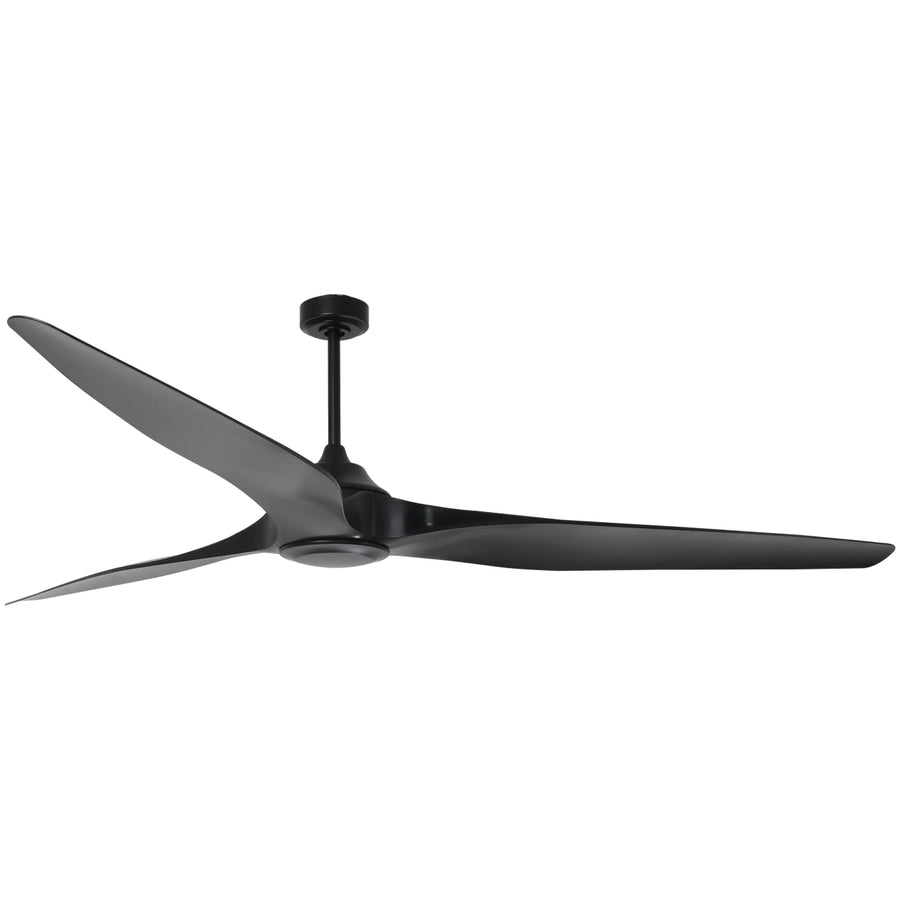
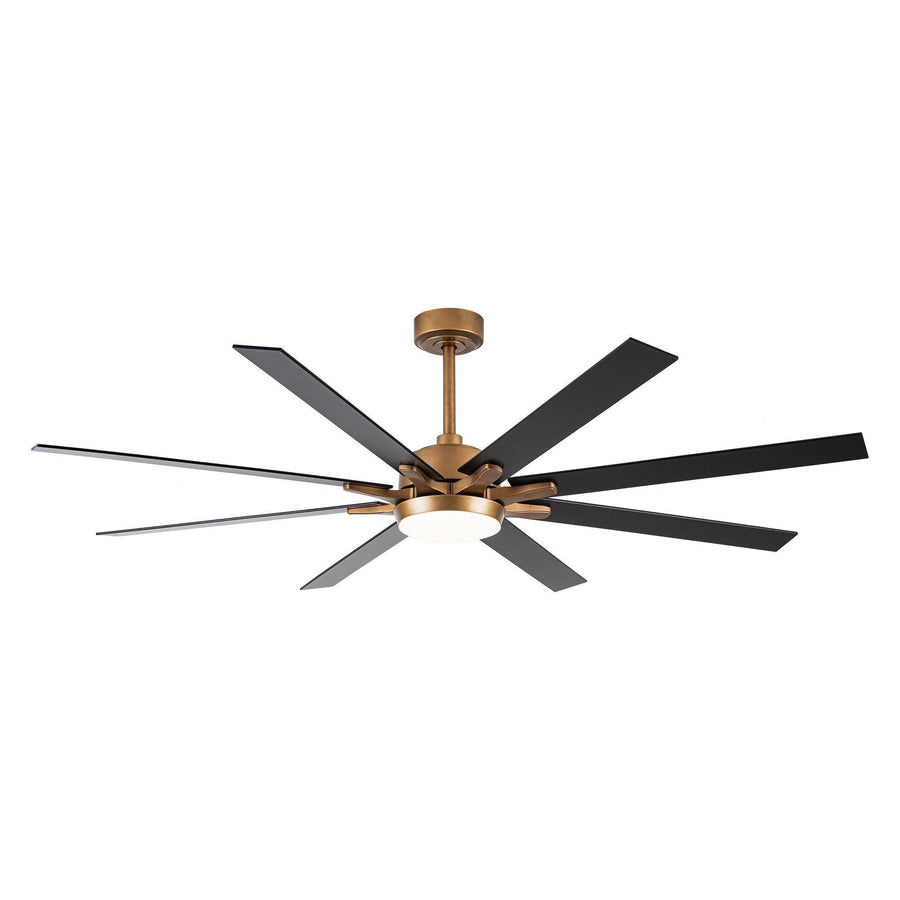
Parrot Uncle offers large ceiling fans for spacious Australian homes and covered outdoor areas.
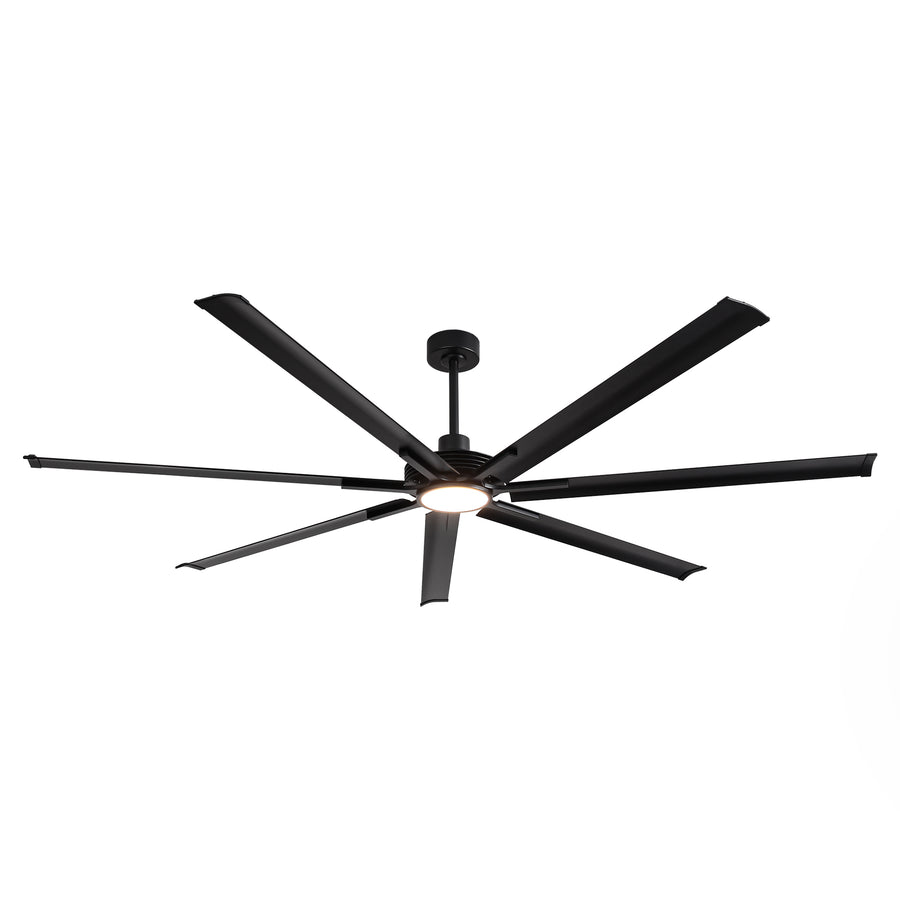
84-Inch / 100-Inch Industrial DC Ceiling Fan
This industrial-style fan features seven reversible blades, a DC motor, and six-speed remote control. It is suitable for indoor spaces and covered patios protected from direct rain and prolonged moisture. Its large size makes it an option for spacious alfresco areas.
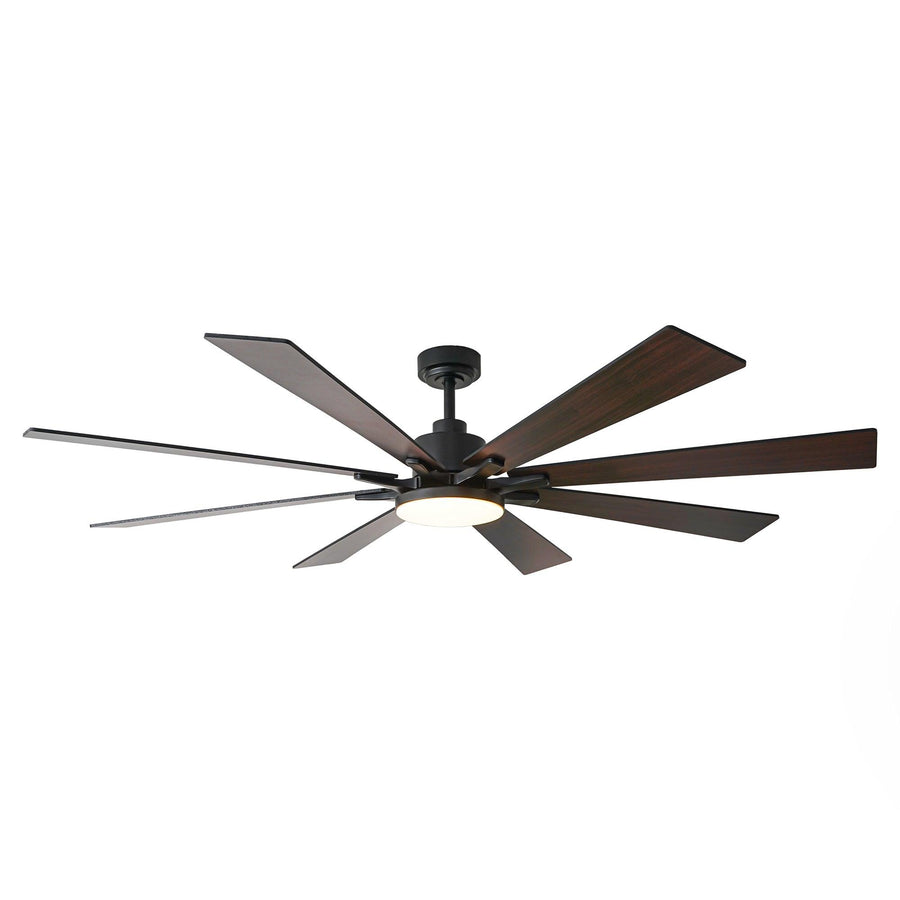
60-Inch Oretha Windmill DC Ceiling Fan
The Oretha features eight walnut-finish blades, a 40W DC motor, and integrated LED lighting. It delivers up to 6,500 CFM of airflow and includes a six-speed remote. This model is rated for dry indoor locations only and is not suitable for outdoor installation.
Final Thoughts
Large ceiling fans can work well in Australian outdoor living areas when they are designed for the environment.
For covered alfresco spaces, prioritise suitable weather ratings, corrosion-resistant materials, and sufficient airflow. Coastal homes should pay particular attention to salt exposure and maintenance.
Choosing the right fan size and installation position can make your outdoor entertaining area more comfortable throughout the warmer months.
